

In January 2008, Kulbhushansingh Suryawanshi was 23 when he encountered three snow leopards in Spiti: a mother, her cub, and a sub-adult male beginning to make his way on his own. That night, Kullu bought livestock for a feast because the entire village wanted to celebrate. Among them was an elderly woman who had only heard stories about the snow leopard. She wept as the ghost of the mountains became real before her.
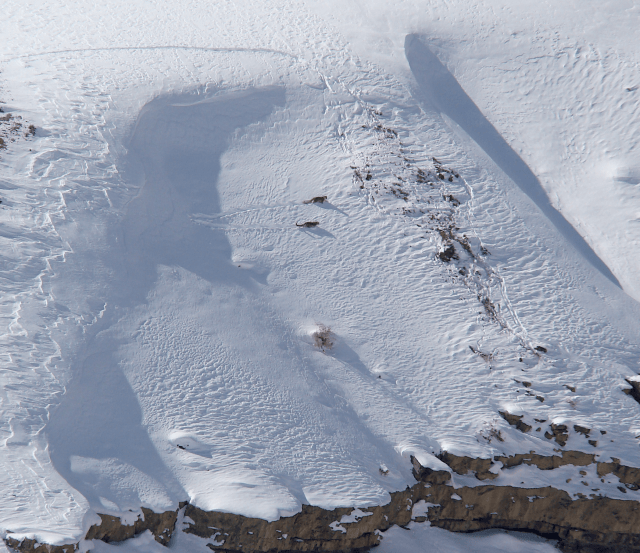
Kullu, as friends and colleagues know him, named the young male Shadow. Shadow was almost the same size as his mother and about to wean off. Kullu kept encountering him over the years that followed, as a young male looking for a home range of his own. At the time, Kullu was also trying to find his own path. A career devoted to studying snow leopards in the Himalayas was still more possibility than plan. Watching Shadow find his own way helped make that possibility feel real.
Nearly twenty years later, Kullu, Strategic Lead at Snow Leopard Trust, returns to that beginning in his new book, The Ghost of the Mountains: Unraveling the Secrets of the Snow Leopard. Shadow is one of the cats through which he retraces a life spent trying to understand how snow leopards move, hunt, survive, and disappear into the mountains around them. But the closer Kullu followed the cats, the more their lives led him into questions about the people who live alongside them. Again and again, research into snow leopards opens into questions about people, and what he learns from communities changes how he understands the research.
“I think the fundamental difference is I was not based out of a camp, but I was based out of a village,” Kullu said in a recent conversation about the book. “Sometimes I was looking at community through data as a lens, and sometimes I’m looking at data through community as the lens.”
“I think that is the dialectic that keeps happening through the book,” he said. “We keep going back and forth between the cat and the communities that share these mountains.”
Living with Snow Leopards
In Spiti, one of Kullu’s research questions was deceptively simple: how did people who lived with snow leopards actually feel about them? The answer was more nuanced than Kullu anticipated.
During his PhD research in Spiti, Kullu and his colleagues spoke with people across communities and translated those conversations into statistical data. Attitudes ranged from very positive to very negative, but the amount of livestock an individual herder had lost did not reliably predict how that person often felt about snow leopards. Perception of the cat was not based entirely on personal loss, and herders who lost the most livestock did not necessarily hold a more negative view.
What mattered more was what was happening across the village. Herders in communities with greater overall losses tended to view the cats more negatively, even when their own losses were not especially high.
People also responded to the experiences of those around them, to whether their community felt secure or vulnerable, and to whether institutions were present when problems occurred.
When people were asked what should happen when a snow leopard killed livestock, one response surfaced repeatedly: the cat also has to eat too.

But that tolerance had limits. When a predator gets inside a corral and eliminates a family’s livestock, the loss is devastating. As Kullu writes, “the economic loss from such incidents is similar to losing one’s home in an earthquake.”
One woman in Spiti responded more pointedly to Kullu’s growing fascination with the cats. After a snow leopard killed her cow and left her young son without milk, she asked him, “Why don’t you marry one of your snow leopards?”
Agency Over Their Relationship with the Cats
Sumdo is a small settlement of 70 refugee herders in Ladakh, India. In January 2020, wolves attacked one of their goat herds. More attacks followed, including snow leopards entering corrals and killing livestock. Within six months, the herders’ corrals had been attacked a dozen times, and more than 100 animals had been killed.
Kullu’s team shared a predator-proof corral design used in Tost, Mongolia. The herders in Sumdo looked at the design and said it would not work for them. Their terrain was rockier; nearby rocks could give snow leopards a way over the walls, and keeping corrals dry in the region’s cold conditions was essential. Instead, they proposed a simpler design built largely from local stone and mud, with a chain-link roof that kept predators out while allowing in sunlight and air.
Kullu was unsure whether the herders’ simpler design would work. As he writes, “Donors had put their faith in high technology solutions and sophisticated ideas proposed by experts. I would have to answer to our donors if something went wrong.” Even so, the team backed the herders’ design. They built seven corrals, and two years later not a single animal had been killed in them.
In Sumdo, the herders designed the solution themselves and prided themselves on leaving their valuables more securely in their corrals than at home. Kullu quotes his colleague Ajay Bijoor, who put the difference plainly: “The herders don’t want a predator-proof corral; they want agency. Agency to decide on the corral design, agency to manage their own lives, which were enmeshed with the pastures, the animals, and the mountains around them.”
For Kullu, it was a clear example of how well-intentioned conservation can fall short and undermine the long-term partnerships built on equal terms when solutions are designed for communities rather than with them, by them.
For Kullu, Sumdo showed what conservation can look like when communities have the agency to design solutions themselves.

A Changing Relationship
For much of the global audience, the snow leopard has long been imagined as an elusive cat somewhere beyond ordinary human life, surviving in an almost untouched mountain wilderness. Kullu had spent twenty years seeing something very different.
“Snow leopards are not far away, isolated, remote from the world,” he said while discussing the book. Their lives and the lives of the people around them are affected by forces that can originate far beyond the mountains, including global markets, migration, infrastructure, climate change, and government policy.
By February 2023, snow leopard sightings in Kibber had become much more routine. In 2008, Kullu had seen an adult female he called Sunshine with her cub, along with Shadow. For the researchers in Kibber then, it was only the second snow leopard sighting in a decade. Fifteen years later, Kullu writes, “two sightings over two winter days were considered par for the course.” Long-term camera-trap data showed that the population itself had remained much the same. Better winter access and optics, years of accumulated knowledge, and local spotters working with a growing snow leopard tourism economy had made the cats far more accessible.
Kullu is careful not to turn that change into a simple story of people learning to value the cats. “People always liked snow leopards. Now they have a reason to express that likeness,” he said.
Nearly twenty years later, the parallel has become clearer to him. Shadow was a dispersing sub-adult trying to establish himself, while Kullu was 23 and trying to establish a life and career of his own in the Himalayas. In the interview, he described Shadow as a kind of mirror, even a “spirit animal,” and said that seeing him helped give him the conviction that becoming a snow leopard scientist was actually possible.
– – – – – – – – –
The Ghost of the Mountains is a thoughtful, vivid, and deeply personal account of a life spent learning from snow leopards and the people who share their landscapes. It brings together nearly two decades of field experience, scientific discovery, community relationships, humor, and hard-earned lessons in a way only Kullu could tell. We hope you’ll read the book and experience the full story in his own words.
CTA: Sign up for our monthly E-Newsletter to get all the latest updates about the cats in our long-term ecological study.
Photo credits: NCF-India
Acknowledgements: